TMS for OCD (Obsessive-Compulsive Disorder)

Understanding OCD

Obsessive-Compulsive Disorder (OCD) is a mental health condition marked by persistent, intrusive thoughts (obsessions) and repetitive behaviors (compulsions). These behaviors are often performed to reduce anxiety, yet they can severely disrupt daily life, work, and relationships.

While medication and cognitive-behavioral therapy (CBT) remain first-line treatments, many patients experience limited relief or unwanted side effects — leading them to seek safe, effective alternatives like Transcranial Magnetic Stimulation (TMS). TMS has been FDA approved for OCD treatment in 2018.
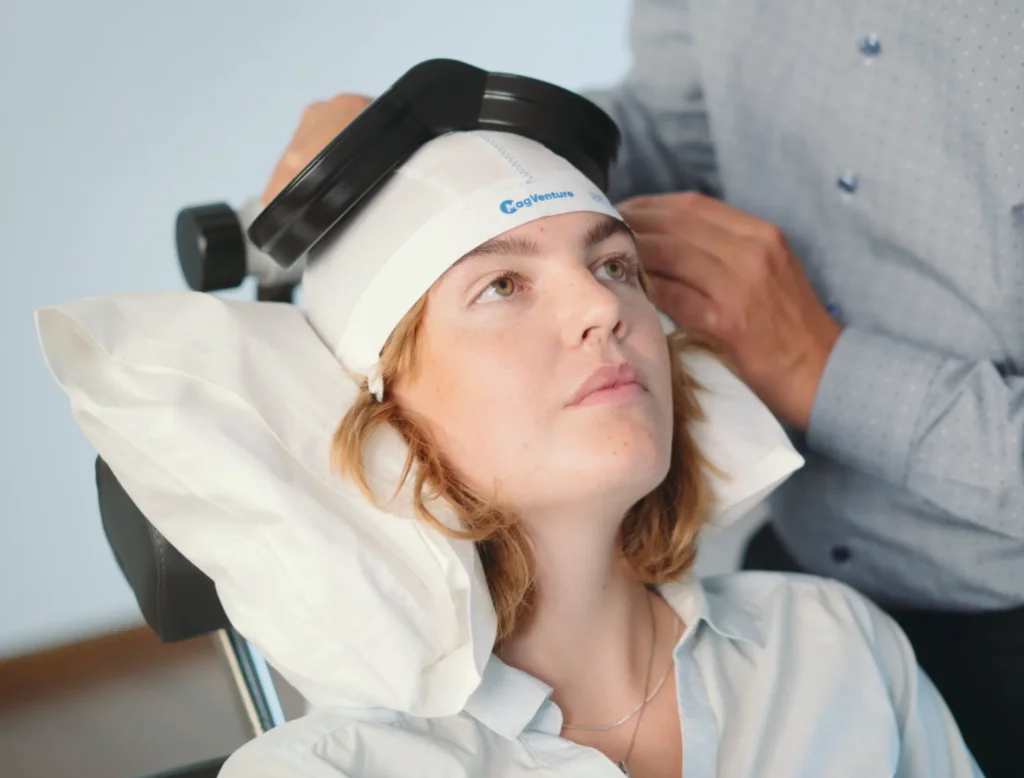
Magventure OCD Rx

How TMS Helps Treat OCD

MagVenture TMS Therapy, an FDA-approved treatment for OCD, uses short magnetic pulses to target the bilateral dorsomedial prefrontal cortex (DMPFC) — a key brain area involved in obsessive thinking and compulsive behaviors.
By safely stimulating this region, TMS helps restore balance in neural circuits that regulate mood, cognition, and impulse control. Research shows that this modulation reduces OCD symptoms and enhances emotional regulation.
Each treatment session is performed while you are awake, seated comfortably, and fully alert. There is no anesthesia, no medication, and no recovery time required.

Scientific & FDA Approved Background

The MagVenture TMS Therapy System received FDA clearance for adjunctive treatment of OCD in 2020.

This approval was supported by clinical data on more than 500 patients, demonstrating both safety and efficacy.

Treatment involves:

  • 20 Hz TMS stimulation for 18 minutes
  • Targeting the bilateral dorsomedial prefrontal cortex (DMPFC)
  • Typically five sessions per week for six weeks
  • During TMS treatment, exposure to OCD triggers is done while watching TV.
Studies indicate that TMS not only affects local brain activity but also modulates long-range neural networks, leading to sustained improvement in OCD symptoms.

Treatment Experience

MagVenture TMS Therapy is available by prescription only. Your psychiatrist will assess your medical history, treatment response, and symptom profile to determine candidacy.
  • 6-week course (5 sessions per week for weeks 1–5; 4 sessions in week 6)
  • Each session lasts approximately 18 minutes
  • Before each session, your provider may gently provoke mild OCD symptoms to optimize the brain’s responsiveness to treatment
Patients describe a tapping sensation on the head and hear a rhythmic clicking sound. Most people relax, watch TV, or read during treatment.

Clinical studies show:

  • 38% response rate after six weeks of treatment
  • 45% response rate one month post-treatment
  • 11–18% response in placebo groups for comparison
TMS is well-tolerated. Some patients experience mild headache or scalp discomfort, which typically resolves quickly. You can resume your usual activities immediately after each session.

Benefits of TMS for Obsessive-Compulsive Disorder (OCD)

An increasing number of patients are turning to TMS due to its strong track record of safety and effectiveness.

Key Benefits Include:

  • Non-invasive — no anesthesia or surgery
  • Non-medication alternative — no systemic side effects
  • Non-sedative — remain awake and alert
  • FDA-approved for OCD since 2020
  •  Evidence-based — ~45% reduction in OCD symptoms one month post-treatment
  • TMS is added to SSRI medication and CBT therapy for OCD

OCD by the Numbers

  • Lifetime prevalence worldwide: ~1.5% (women), ~1.0% (men)
  • In the U.S.: ~2.3% overall lifetime prevalence
  • Gender differences: women are more affected overall, but boys have a higher prevalence in childhood

Schedule a Detailed Evaluation Today

If you or a loved one continues to struggle with obsessive thoughts and compulsive behaviors despite therapy or medications, TMS may provide the breakthrough you’ve been looking for.
Contact Dr. Gupta’s STW in Great Neck, NY to schedule a comprehensive consultation and personalized treatment plan.