Precision-guided, non-invasive brain stimulation—delivered in an intensive 1–5 day treatment plan for eligible patients.
Accelerated protocols may be valuable when depression has not improved sufficiently with medication or psychotherapy, or when a multi-week schedule is difficult.
Usually one session each weekday over a longer course.
Multiple brief sessions per day, separated by planned rest intervals.
The schedule is selected after a comprehensive evaluation and individualized to each patient’s clinical needs.
10 sessions/day × 5 days
Uses the same accelerated treatment cadence as SAINT, without individualized functional-MRI targeting. It should not be considered equivalent to the complete SAINT system.
5 sessions/day × 10 days
A less compressed schedule delivered over approximately two treatment weeks.
3 sessions/day × 15 days
A more gradual accelerated course delivered over approximately three treatment weeks.
20 sessions in 1 day
A clinician-directed, emerging approach that combines an intensive one-day schedule with D-cycloserine.
10 sessions/day × 2 days
A clinician-directed two-day option using D-cycloserine as a potential neuroplasticity-enhancing adjunct.
5 sessions/day × 4 days
A clinician-directed four-day option combining a total of 20 treatment sessions with D-cycloserine augmentation.
D-cycloserine augmentation and some accelerated schedules are emerging, off-label, or investigational approaches. They are not appropriate for everyone and require individualized medical evaluation, informed consent, and careful monitoring.
Standard TMS: The conventional course—commonly about 30 sessions over 6–7 weeks—is widely covered by Medicare and commercial insurance plans when diagnosis, prior-treatment, medical-necessity, and authorization requirements are met. Benefits vary by plan.
Accelerated TMS: The Magnus Medical SAINT Neuromodulation System is FDA-cleared, but SAINT and other accelerated schedules are not yet routinely reimbursed by most insurance plans. Limited coverage or access may be available in selected institutional or university-based programs.
At present, accelerated TMS is primarily a self-pay service offered to carefully selected patients. Some insurers are evaluating coverage, but the timing and scope of any future reimbursement cannot be guaranteed.
You sit comfortably while the TMS coil delivers brief magnetic pulses. A trained team member remains nearby, and you can return to normal activities after each treatment day unless advised otherwise.
When clinically appropriate, Dr. Gupta may combine imaging and physiologic data with your history and symptoms. These assessments support clinical judgment; they do not independently diagnose depression or guarantee a treatment response.
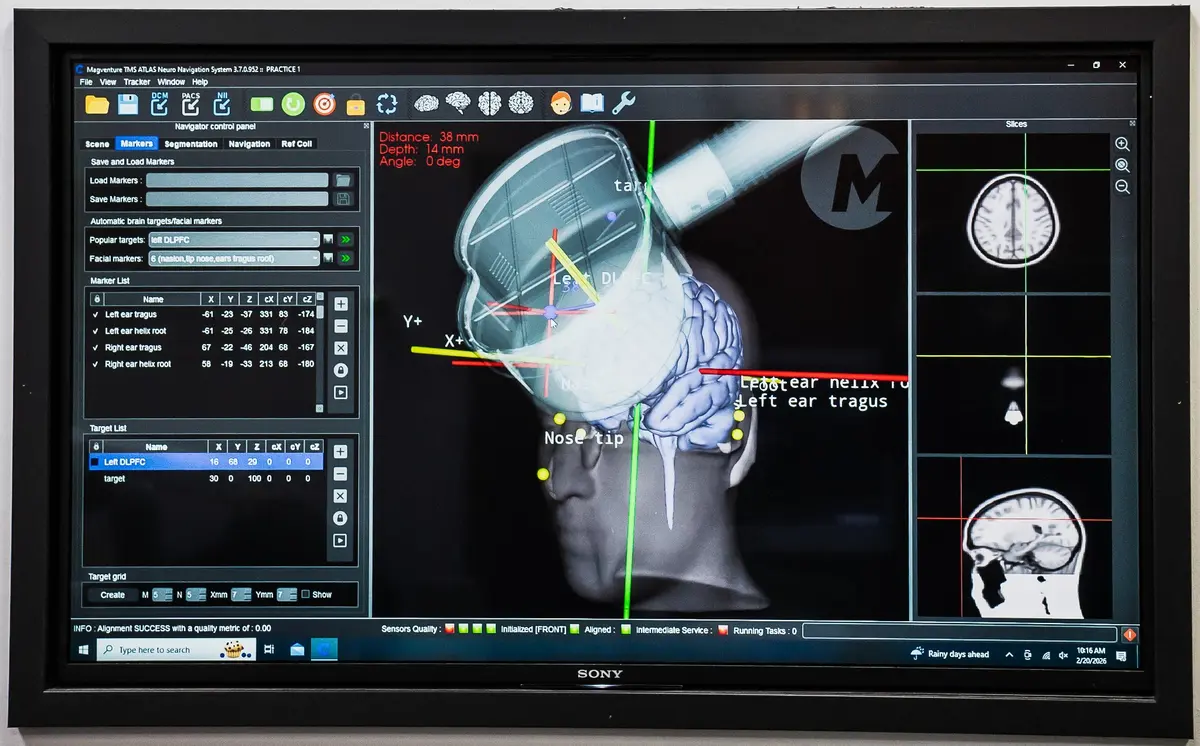
Maps the treatment target and helps reproduce coil placement accurately.
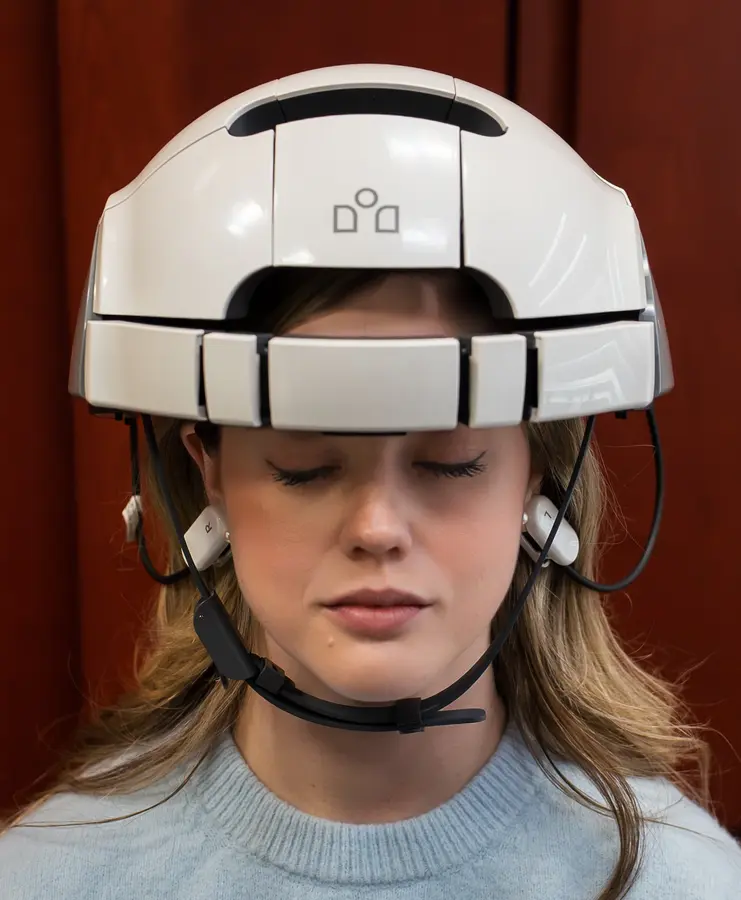
May add information about brain electrical activity and network patterns.
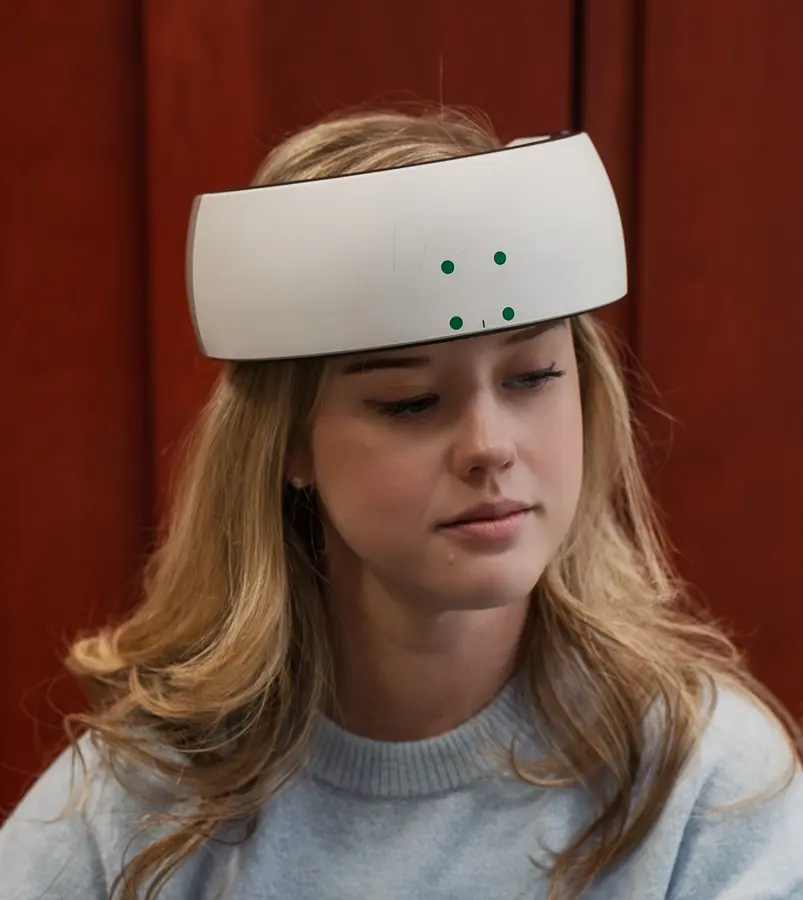
May help assess changes in frontal brain oxygenation during cognitive activity.
Your care is led by Dr. Adarsh K. Gupta, a Harvard-trained neuropsychiatrist board-certified in psychiatry, neuropsychiatry, sleep medicine, and psychosomatic medicine.
Accelerated TMS is supported by growing clinical evidence demonstrating its potential effectiveness for treatment-resistant depression.
Stanford SAINT Trial (American Journal of Psychiatry) Read the Full Study via AJP
Researchers reported remission rates of up to 79% among carefully selected participants with treatment-resistant depression using the Stanford Accelerated Intelligent Neuromodulation Therapy (SAINT) protocol.*
UCLA Accelerated TMS Research Read the UCLA Study Summary
Additional clinical studies continue to demonstrate that condensed treatment schedules may produce outcomes comparable to traditional TMS while significantly reducing treatment time.
Long-Term Follow-Up Studies View study details on long-term durability
Research has shown that many patients who respond to Accelerated TMS maintain clinical improvement with appropriate follow-up care.*
Check out these blog posts from Dr. Gupta for a closer look at the science, clinical research, and treatment options.
Read our blog on synaptic tagging, the Stanford SAINT study data, and how 5-day protocols work.
Transcranial Magnetic Stimulation (TMS) is FDA-cleared for the treatment of Major Depressive Disorder in appropriate patients. Dr. Gupta will discuss whether Accelerated TMS is appropriate for your individual condition.
Most patients describe the treatment as a gentle tapping sensation on the scalp.
The most common side effect is mild scalp discomfort or headache during the first few sessions, which typically resolves quickly.
No.
Unlike antidepressant medications, TMS does not typically cause side effects such as weight gain, sexual dysfunction, or daytime drowsiness because it does not circulate through the bloodstream.
No.
Accelerated TMS is completely non-invasive. Patients remain awake during treatment and can drive themselves home afterward.
Coverage varies depending on your insurance plan.
Our team will gladly verify your benefits before treatment and explain all available options, including financing when appropriate.
Living with depression can feel overwhelming—but you don’t have to face it alone.
If medications haven’t provided the relief you deserve, Accelerated TMS may offer a faster path toward recovery.
Schedule a consultation with Dr. Gupta to learn whether you’re a candidate for Accelerated TMS and receive a personalized treatment plan designed around your unique needs.