Trouble sleeping can affect how you feel, think, and function. Depression, anxiety, and medical conditions can also disturb sleep. Understanding these connections helps identify what needs treatment, whether that is a sleep disorder, a psychiatric condition, or both. A comprehensive evaluation brings these concerns together in one treatment plan.
Understanding sleep architecture
Sleep architecture describes the pattern of sleep stages and awakenings across the night. The brain cycles through non-REM and rapid eye movement (REM) sleep, usually completing four to six cycles. Deep sleep is more prominent early in the night; REM periods generally become longer toward morning.
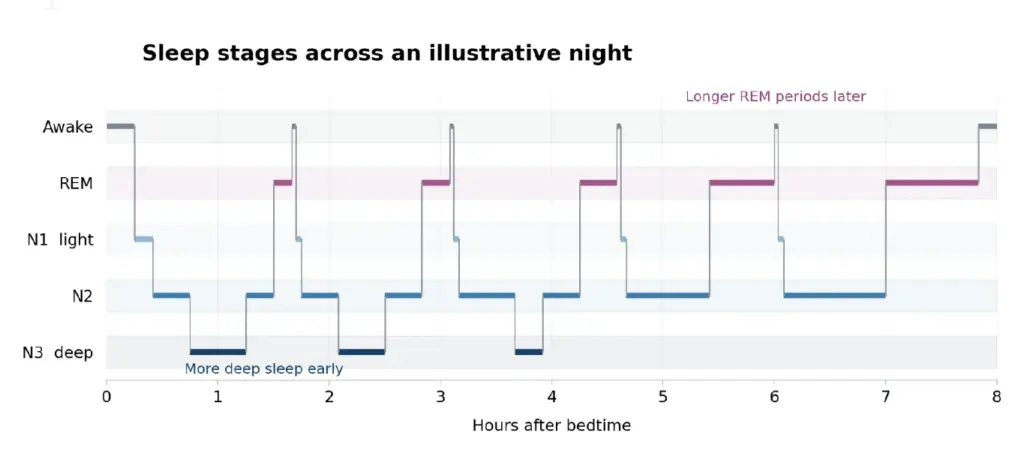
Educational schematic based on normal sleep-stage patterns. The eight-hour interval includes time awake. Timing and stage amounts vary with age and between nights; this is not a patient recording or an individual target.
N1 and N2: N1 is the transition into sleep. N2 is an established stage of non-REM sleep and normally makes up much of the night.
N3: Also called deep or slow-wave sleep, N3 is an important part of restorative sleep.
REM: An active brain state associated with vivid dreams and processes involved in learning and emotional memory. REM and deep sleep are distinct stages.
Why the brain needs sufficient sleep
Sleep supports the brain processes involved in attention, learning, memory, and emotional regulation. Healthy sleep gives these processes time to occur across repeated cycles. Poor or fragmented sleep can leave a person more irritable, less attentive, and less able to manage everyday stress.
Most adults need at least seven hours of actual sleep regularly, and many need seven to nine hours. Seven hours is a general minimum, not a precise prescription for everyone. Adequate sleep supports memory formation, clear thinking, emotional regulation, immune function, and metabolic and cardiovascular health. Spending eight hours in bed may still provide too little sleep if much of that time is spent awake.

Sufficient sleep supports both brain and body health.
Sleep quality also depends on continuity and timing. A wearable estimate of “deep sleep” does not, by itself, establish whether sleep is healthy. Clinical symptoms and appropriate testing provide the context needed to interpret concerns.
The two systems that regulate sleep
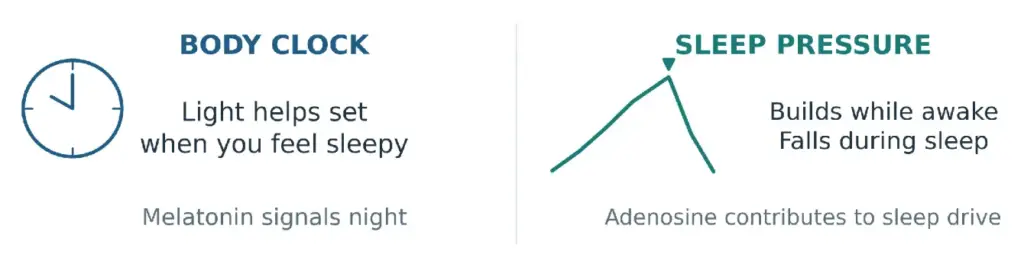
The body clock and sleep pressure work together to regulate sleep. Schematic, not a recording.
Circadian rhythm: The brain’s approximately 24-hour clock helps determine when we feel alert or sleepy. Its central coordinator, the suprachiasmatic nucleus, receives light signals from the eyes. Light exposure helps set this clock, while evening melatonin signals biological night.
Homeostatic sleep drive: Sleep pressure builds as we remain awake and falls during sleep. Adenosine contributes to this pressure. Caffeine blocks adenosine receptors, temporarily reducing the feeling of sleepiness without replacing the need for sleep.
These systems work together. Irregular schedules, shift work, late caffeine, and bright evening light can interfere with their coordination.
Why the November clock change matters

The clock change and seasonal shortening of daylight are separate processes.
In New York, daylight saving time ends on November 1 in 2026, when clocks move back one hour. This changes the clock time of sunrise and sunset; seasonal shortening of daylight is a separate process. Some people experience a temporary mismatch between their internal clock and daily schedule.
Keep a consistent wake time, seek daylight after waking, and reduce bright light before bed. Persistent seasonal depression deserves evaluation rather than being attributed only to the clock change. Seasonal affective disorder involves a recurring seasonal pattern of depression. A clinician may recommend psychotherapy, medication, or appropriately timed bright light therapy, with special care in people with bipolar disorder.
Sleep and mental health affect each other
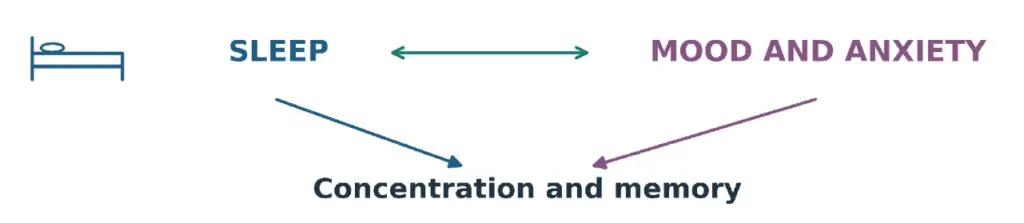
Sleep and mood influence each other; both can affect daytime thinking.
The relationship is bidirectional: depression and anxiety can interfere with falling or staying asleep, while persistent insomnia can increase vulnerability to subsequent depression and anxiety. Worry about sleep may then make bedtime more stressful. Treating sleep and psychiatric symptoms together can help interrupt this cycle.
Cognition is part of this relationship. Poor sleep can impair concentration and memory, and mood symptoms can make these difficulties worse. New or progressive cognitive symptoms still warrant assessment for other causes rather than being assumed to come entirely from sleep.
What research says about sleep and dementia

Long-term studies associate persistent short sleep with higher dementia risk. In the Whitehall II study, 7,959 adults were followed for up to 25 years; persistent sleep of six hours or less was associated with about 30% higher relative dementia risk compared with seven-hour sleep. This was an observational association, not proof that insufficient sleep caused dementia. Early brain changes can also disturb sleep. Treating sleep problems supports health and functioning, but cannot be promised to prevent dementia.
Common causes of disrupted sleep
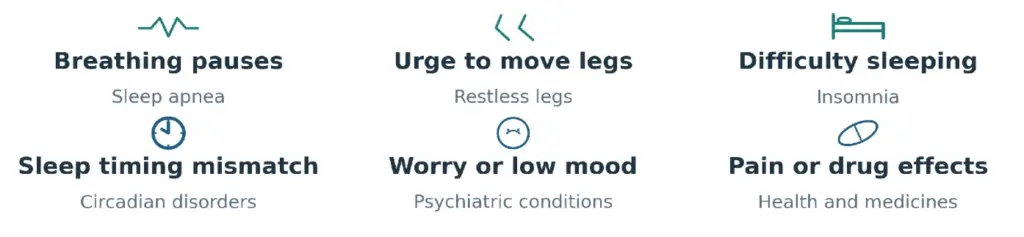
Symptoms can overlap. A clinical evaluation helps identify the cause.
- Obstructive sleep apnea: Repeated narrowing or closure of the upper airway can cause oxygen drops and brief awakenings. Clues include loud snoring, gasping, witnessed breathing pauses, and daytime sleepiness.
- Restless legs syndrome: An urge to move the legs, usually worse during rest in the evening and relieved by movement, can delay sleep. Periodic limb movements during sleep may also require evaluation.
- Insomnia and circadian disorders: Difficulty sleeping despite adequate opportunity, or a body clock that conflicts with required sleep times, can reduce sleep duration and continuity.
- Psychiatric and medical conditions: Depression, anxiety, bipolar disorder, chronic pain, reflux, nighttime urination, and other conditions may disturb sleep. Medication effects, alcohol, caffeine, and other substances also deserve review.
A comprehensive evaluation guides testing & treatment
Dr. Gupta is board certified in Psychiatry and Sleep Medicine. At Sleep, TMS & Wellness Psychiatry, the evaluation considers sleep schedule and symptoms alongside mood, anxiety, cognition, medical history, and medications. A sleep diary and symptom questionnaires can help identify patterns. Testing is selected to answer a specific clinical question.
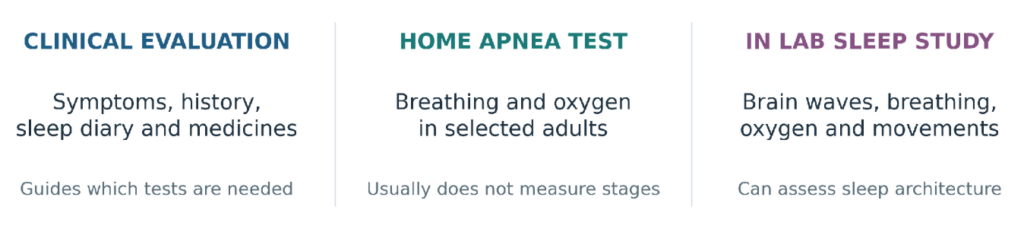
Testing is chosen for the clinical question. Not every sleep complaint needs an overnight study.
A home sleep apnea test may be appropriate for selected adults with suspected obstructive sleep apnea. Most conventional home apnea tests focus on breathing and oxygen rather than directly measuring sleep stages. An overnight in-lab study records brain waves, breathing, oxygen, and movements, allowing assessment of sleep architecture and certain other disorders. A negative or inconclusive home apnea test should be followed by in-lab testing when clinically indicated.
Insomnia and restless legs syndrome are usually diagnosed clinically. Sleep diaries, actigraphy when appropriate, and targeted blood tests such as iron studies may help; an overnight study is not necessary for every sleep complaint.
Personalized treatment addresses the underlying cause
After evaluation, Dr. Gupta chooses targeted treatments based on each person’s diagnoses, symptom severity, health conditions, preferences, and response to prior care. A plan may include one or more of the following approaches.
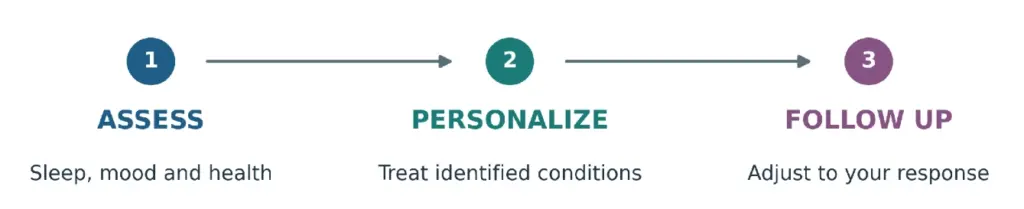
Treatment and follow-up are tailored to each person’s findings and response.
- CBT-I for chronic insomnia. Cognitive behavioral therapy for insomnia addresses sleep habits, conditioned wakefulness, and thoughts that perpetuate insomnia. It is a first-line treatment; sleep hygiene alone is often insufficient. Medication may be considered when appropriate.
- Treatment of sleep apnea. Positive airway pressure such as CPAP, or other appropriate options, can address obstructed breathing. Follow-up checks effectiveness, comfort, and ongoing symptoms.
- Care for restless legs or circadian disorders. Treatment may include correcting low iron when indicated, reviewing contributing medications, and selecting other therapies. Circadian treatment may involve carefully timed light, schedule changes, or melatonin. Timing matters.
- Treatment of depression and anxiety. Psychotropic medications and psychotherapy are chosen according to the diagnosis and individual needs, with attention to their effects on sleep and daytime alertness.
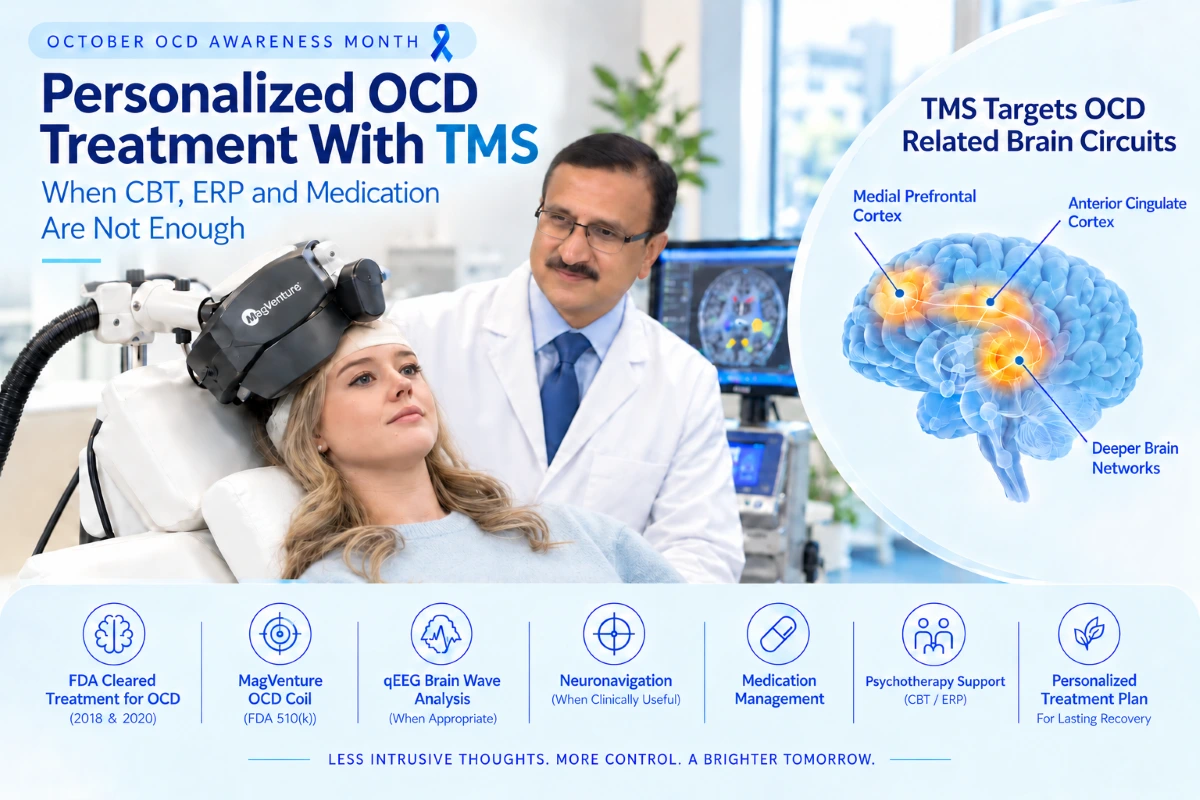
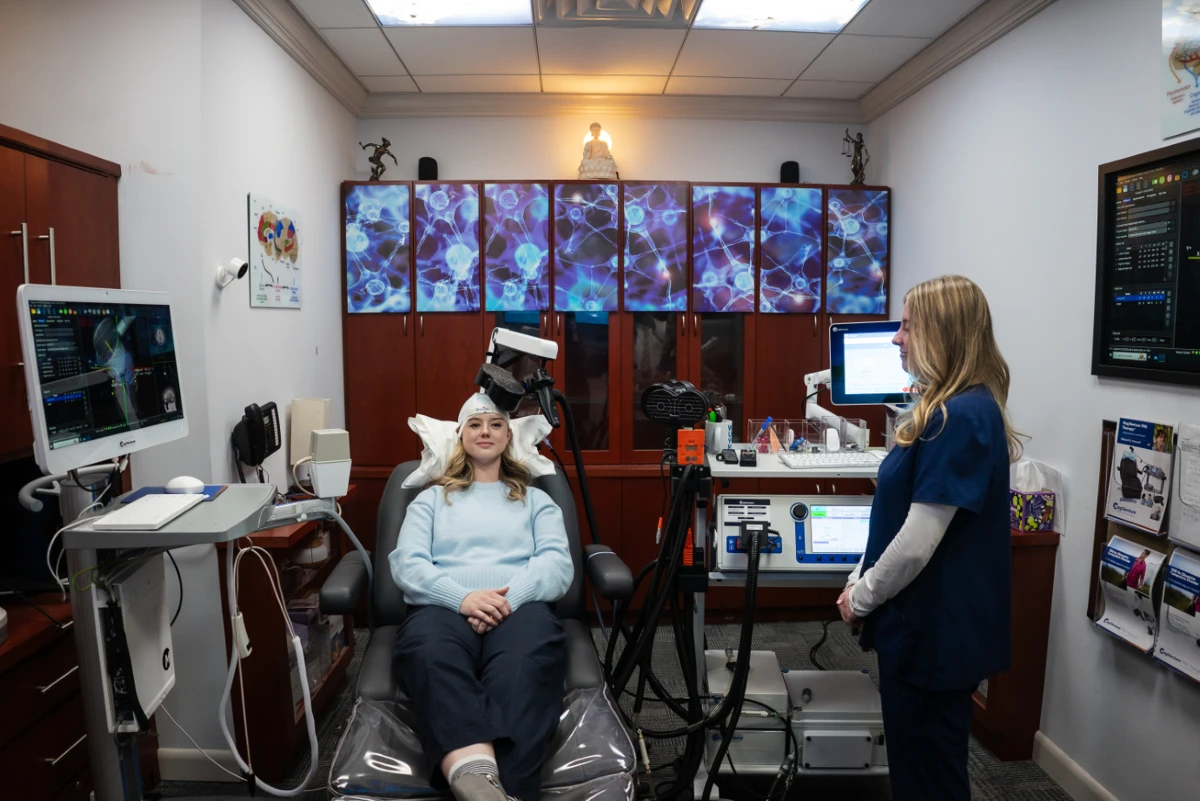
- TMS for appropriate patients with depression. Transcranial magnetic stimulation may be considered, particularly when depression has not responded adequately to usual treatments. Sleep may improve as depression improves. TMS is selected for the depression diagnosis, while coexisting insomnia or sleep apnea receives appropriate treatment.
Follow-up tracks sleep, mood, and daytime functioning so that care can be adjusted as needed.
When insomnia treatment misses the underlying problem
Insomnia can remain poorly managed when treatment focuses on making a person drowsy without identifying why sleep is disturbed. Common pitfalls include the following.
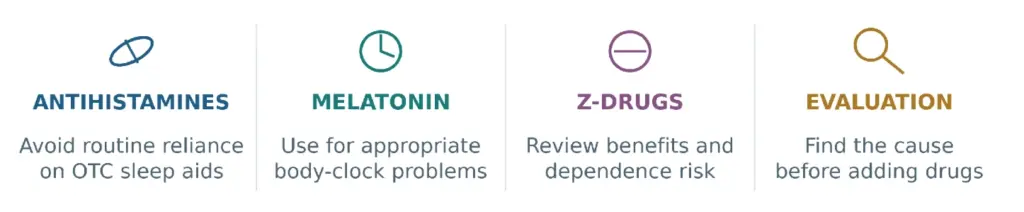
Match treatment to the diagnosis and review medication use regularly.
- Relying on over-the-counter antihistamines. Some Unisom products and other nighttime sleep aids contain sedating antihistamines such as doxylamine or diphenhydramine. Check the active ingredient. Frequent use can lead to tolerance and side effects, including next-day grogginess, dry mouth, constipation, and confusion. Older adults are particularly vulnerable. These medicines are not recommended as routine treatment for chronic insomnia.
- Treating melatonin as a universal sleeping pill. Melatonin is primarily a signal for the body clock. It may help selected circadian problems, such as delayed sleep timing or jet lag, when appropriately timed. Evidence is insufficient to recommend it as a routine treatment for chronic insomnia in adults. It does not address every cause of poor sleep.
- Continuing prescription sleep medicines without reassessment. Z-drugs such as zolpidem (Ambien), eszopiclone (Lunesta), and zaleplon (Sonata) can help selected patients. However, prolonged use requires reassessment because physical dependence and withdrawal can occur, especially with higher doses or longer treatment. A prescription should include a clear purpose, monitoring, and a plan for duration and discontinuation.
- Skipping a comprehensive sleep evaluation. Repeatedly adding or increasing sedating medicines can leave sleep apnea, restless legs, circadian disorders, depression, anxiety, pain, or medication effects unrecognized. Evaluation should guide treatment; an overnight sleep study is needed only when clinically indicated.
CBT-I remains a first-line treatment for chronic insomnia. Dr. Gupta combines evaluation of sleep and mental health to select appropriate care. If you regularly take a prescription sleep medicine, discuss any dose reduction or discontinuation with your prescriber rather than making abrupt changes on your own.
When to seek help
Seek evaluation for persistent difficulty sleeping, unrefreshing sleep, excessive sleepiness, snoring or breathing pauses, distressing leg symptoms, or changes in mood or cognition. You do not need to wait three months if symptoms are severe or affecting safety. Avoid driving when sleepy.
For a personalized assessment with Dr. Gupta, contact Sleep, TMS & Wellness Psychiatry at (516) 684-9535,
560 Northern Boulevard, Suite 206, Great Neck, NY 11021,
or visit DrAGupta.com
Medical disclaimer: This article provides general education. Diagnosis and treatment recommendations require an individual clinical evaluation.